
• The vessel, built by the Turkish shipyard Sanmar, is currently on its way to the Mexican coast to join operations at the Port of Lázaro Cárdenas.
The new tug Ximbal is currently en route to Mexico. This state-of-the-art vessel will join the SAAM Towage fleet to support port operations in Lázaro Cárdenas, one of the main commercial ports in the Pacific.
"The addition of the SAAM Ximbal to our Mexican operations reflects our ongoing commitment to modernizing our services in the region. Lázaro Cárdenas is a key logistics hub for foreign trade, and adding a unit with over 80 tons of bollard pull, a compact design and high environmental sustainability standards ensures safe, agile operations aligned with the demands of modern maritime transport," explained Cristian Espinoza, Country Manager of SAAM Towage Mexico.
The vessel, built by Sanmar Shipyards, aims to strengthen response capacity, safety and energy efficiency in maritime maneuvers at the Mexican port.
Its name, the Mayan word for traveling and moving forward, has special meaning for SAAM. "It accurately reflects what we want to do at SAAM: support and assist our customers with a modern fleet prepared to accompany them as ports evolve," Espinoza commented.
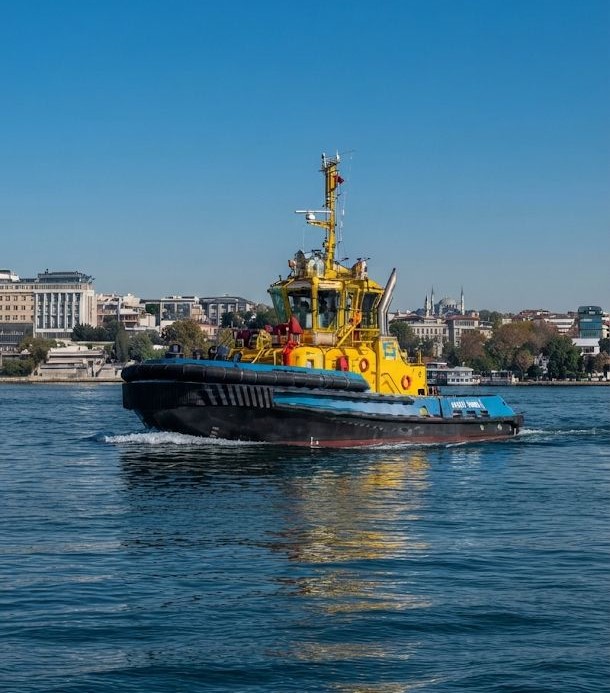
Technical Specifications:
A RAmparts 2400SX-MKII class tug designed by the Canadian firm Robert Allan Ltd., the SAAM Ximbal combines maneuverability in confined spaces with high traction capacity:
• Dimensions: Length overall of 24.4 meters, beam of 12 meters, and navigational draft of 5.45 meters.
• Power and Propulsion: Equipped with two CAT 3516E engines (2,350 kW each at 1,800 rpm), it boasts over 80 tons of bollard pull and a cruising speed of 13 knots. • Safety and Emergencies: Features firefighting certification under the international FiFi 1 standard.
• Environmental Management and Automation: Incorporates high levels of automation in the wheelhouse and engine room, a wastewater treatment plant and an oily water separator, minimizing the environmental footprint during escort and berthing operations.